- Home
- National Stories
- NFL/2026 NFL Draft
- Celebrities and Athletes
- Minnesota Twins 9-14/9-27
- 2026 Minnesota Lynx
- MLB
- NCAA
- National Media
- Travel
- MLS
- 2026 MN Lynx Games 1-13
- Minnesota Twins 8-30/9-13
- Minnesota Twins 8-17/8-29
- Minnesota Twins 8-10/8-16
- Minnesota Twins 7-28/8-8
- Minnesota Twins 7-8/7-26
- 2026 MN Twins 6-23-6-30
- Minnesota Twins 6-5-6-24
- Minnesota Twins 5-29-6-8
- Minnesota Twins 5-13/5-31
- Minnesota Twins 4/18-5-12
- Minnesota Twins 4/4-4/17
Phillies Power Past Twins 7-1 in Field of Dreams Game
By Troy Geary
Geary Sports & Entertainment Network
The Disability Channel
DYERSVILLE, IOWA August 13th, 2026
The setting was everything baseball fans could have imagined.
The cornfields. The lights. The throwback uniforms. The Field of Dreams.
But for the Minnesota Twins, the night ended with a frustrating 7-1 loss to the Philadelphia Phillies in front of 7,163 fans at the Field of Dreams in Dyersville.
The Phillies jumped on Twins starter Taj Bradley early and never gave Minnesota a chance to get back into the game. Philadelphia finished with 12 hits, including three home runs, while Aaron Nola delivered one of his better outings of the season to earn the victory.
Kyle Schwarber was the biggest offensive story of the night.
Schwarber went 2-for-5 with two home runs, three RBI and two runs scored. He got Philadelphia on the board immediately in the first inning with a solo home run off Bradley, then struck again in the fourth inning with a two-run shot.
The Phillies also got a home run from Brandon Marsh, who finished 2-for-2 with two runs scored and two RBI.
Luis Arraez continued to show why he is one of the toughest hitters in baseball, going 3-for-5. Trea Turner added a hit and scored a run, while Bryce Harper went 1-for-4 with an RBI and a run scored.
Philadelphia scored twice in the first inning before Minnesota answered in the second.
The Twins' lone run came from Luke Keaschall, who gave Minnesota some life with a solo home run to left field off Nola. Keaschall finished 2-for-3 with a home run, an RBI, a walk and a run scored.
But Minnesota could not generate the big inning it needed.
The Twins finished with eight hits but went 0-for-5 with runners in scoring position and left nine runners on base. Minnesota also struck out 12 times.
Nola settled in after allowing Keaschall's home run and kept the Twins from putting together any sustained rallies. The veteran right-hander allowed five hits and one earned run over five innings while striking out nine and walking three.
Bradley had a difficult night against a Philadelphia lineup that was able to capitalize on mistakes.
He allowed seven hits and five earned runs in four innings, walking four and striking out three. Bradley entered the game having established himself as one of Minnesota's most reliable starters this season, but the Phillies consistently found ways to put pressure on him.
Philadelphia added two more runs in the seventh inning when Marsh launched a two-run home run, putting the Phillies ahead 7-1 and essentially putting the game out of reach.
For Minnesota, Trevor Larnach went 2-for-5, while Byron Buxton went 1-for-4. Jefers finished 2-for-3 with a walk, and Keaschall provided the only extra-base damage for the Twins with his home run.
The Twins also turned a double play involving Kaelen Culpepper, Brooks Lee and Royce Lewis.
The loss drops Minnesota to 60-63 on the season, while Philadelphia improved to 65-58.
For one night, baseball returned to the cornfields and the Field of Dreams once again delivered the atmosphere Major League Baseball hoped for.
But while the setting was unforgettable, the Twins will leave Dyersville knowing they have work to do.
Minnesota got eight hits, but Philadelphia's power and ability to capitalize with runners on base made the difference.
The Phillies hit three home runs.
The Twins hit one.
And in a game played at one of baseball's most iconic venues, that difference told the story.

Twins vs Phillies Lineup FIeld of Dreams Game

MINNESOTA TWINS
1. Trevor Larnach — LF
2. Byron Buxton — CF
3. Ryan Jeffers — C
4. Josh Bell — DH
5. Royce Lewis — 1B
6. Kody Clemens — 2B
7. Luke Keaschall — RF
8. Brooks Lee — 3B
9. Kaelen Culpepper — SS
Pitcher: Taj Bradley — RHP (9-4, 3.76 ERA)
PHILADELPHIA PHILLIES
1. Kyle Schwarber — DH
2. Trea Turner — SS
3. Bryce Harper — RF
4. Luis Arraez — 2B
5. Bryson Stott — 3B
6. Alec Bohm — 1B
7. Brandon Marsh — LF
8. J.T. Realmuto — C
9. Justin Crawford — CF
Pitcher: Aaron Nola — RHP (3-9, 5.47 ERA)
Iowa Cubs Power Past St. Paul Saints 6-3 in Field of Dreams

By Troy Geary
Geary Sports & Entertainment Network
The Disability Channel
DYERSVILLE, IOWA August 11th, 2026
For one night, the cornfields surrounding the Field of Dreams provided the backdrop for another chapter in baseball history. But once the first pitch was thrown, the Iowa Cubs and St. Paul Saints were focused on the same thing, winning a baseball game.
It was the Cubs who made the biggest plays. Iowa hit four home runs, including three in a five-run fifth inning, and held off a late push from the Saints to defeat St. Paul 6-3 Tuesday night in the Minor League Baseball Field of Dreams Game in Dyersville. The game marked the return of Minor League Baseball to the Field of Dreams site for the first time since 2022. The matchup featured the Triple-A affiliates of the Chicago Cubs and Minnesota Twins before the Twins and Philadelphia Phillies take the field Thursday.
Ben Ross, the Saints' third baseman, continued his recent power surge by launching a solo home run in the bottom of the first inning off Iowa starter Jordan Wicks. It was Ross' 13th home run of the season, giving St. Paul an early 1-0 lead. Ross finished the night 1-for-4 with a home run, an RBI and three strikeouts. The Saints had a chance to build on the early advantage, but Iowa's offense responded in the third.
Greg Jones answers Iowa shortstop Greg Jones provided the answer with a solo home run in the third inning, his second of the season, tying the game at 1-1. Jones finished 1-for-3 with an RBI and a run scored, while also drawing a walk. The game was tied heading into the fifth inning. That's when Iowa's offense changed the game. Cubs explode for five runs The Cubs sent nine batters to the plate in the fifth inning and scored five runs, turning a 1-1 game into a 6-1 advantage. And they did it with power. Ben Cowles started the home-run barrage with his sixth homer of the season, giving Iowa a 2-1 lead. Justin Nwogu followed with his first home run of the season, extending the lead to 3-1.
Then came the biggest swing of the night. B.J. Murray Jr. launched a three-run home run, his 13th of the season, putting Iowa ahead 6-1. Murray finished 1-for-4 with three RBI and a run scored. The three homers in the fifth accounted for all five of Iowa's runs in the inning. It was the type of offensive outburst that can change the direction of a game in a hurry. Saints couldn't find the big inning St. Paul continued to battle, but the Saints couldn't generate the type of big inning Iowa produced in the fifth. The Saints finished with five hits, compared with seven for Iowa, and struck out nine times.
Walker Jenkins went 1-for-3 and drew a walk, while Emmanuel Rodriguez went 0-for-3 with a walk. Tristan Gray had one of St. Paul's five hits and scored a run. Cody Morissette also collected a hit, while catcher David Banuelos the box score shows Báñuelos at catcher, who went 1-for-4 with an RBI. That RBI helped St. Paul cut into Iowa's lead, but the Saints couldn't get the tying run to the plate. Wicks gets the win Wicks earned the victory for Iowa, improving to 2-9 on the season. The Cubs' offense gave him plenty of support after the fifth-inning explosion, allowing Iowa's pitching staff to protect the lead.
St. Paul starter Kendry Rojas kept the Saints in the game early before Iowa broke through against Hidalgo, who was charged with the loss and fell to 3-2. Klobosits closed out the game for Iowa and recorded his third save of the season. A night the players won't forget The final score will go into the standings.
The memories from this night will go much further. The Field of Dreams has become one of the most recognizable baseball locations in the country, and Tuesday night gave the Saints and Cubs an opportunity to become part of that history. For St. Paul, the night featured a home run from Ross and a lineup filled with players who remain important pieces of the Twins' organization.
For Iowa, the night belonged to the long ball. Four home runs. Seven hits. Six runs. And most importantly, a victory. The Cubs leave the Field of Dreams as winners, defeating the Saints 6-3 in a game that was about baseball's past, present and future , all played out in the middle of an Iowa cornfield.
2026 MLB Draft
1. Chicago White Sox

Roch Cholowsky SS UCLA
2. Tampa Bay Rays

Grady Emerson SS, Fort Worth Christian HS (TX)
3. Minnesota Twins

Vahn Lackey C, Georgia Tech
4. San Francisco Giants

Jackson Flora, RHP, UC Santa Barbara
5. Pittsburgh Pirates

Derek Curiel, OF, LSU
6. Kansas City Royals

Zion Rose, OF, Louisville
2026 MLB Final Mock Draft
Philadelphia: July 11th, 2026
By Troy Geary
Geary Sports & Entertainment Network
1. Chicago White Sox – Roch Cholowsky, SS, UCLA
2. Tampa Bay Rays – Grady Emerson, SS, Fort Worth Christian HS (TX)
3. Minnesota Twins – Vahn Lackey, C, Georgia Tech
4. San Francisco Giants – Justin Lebron, SS, Alabama
5. Pittsburgh Pirates – Derek Curiel, OF, LSU
6. Kansas City Royals – Jackson Flora, RHP, UC Santa Barbara
7. Baltimore Orioles – Eric Booth Jr., OF, Oak Grove HS (MS)
8. Athletics – Ryder Helfrick, C, Arkansas
9. Atlanta Braves – Tyler Bell, SS, Kentucky
10. Colorado Rockies – Jacob Lombard, SS, Gulliver Prep HS (FL)
11. Washington Nationals – Ace Reese, 3B, Mississippi State
12. Los Angeles Angels – Liam Peterson, LHP, Florida
13. St. Louis Cardinals – AJ Gracia, OF, Virginia
14. Miami Marlins – Chris Hacopian, 2B, Texas A&M
15. Arizona Diamondbacks – Trevor Condon, OF, Etowah HS (GA)
16. Texas Rangers – Gio Rojas, LHP, Stoneman Douglas HS (FL)
17. Houston Astros – Mason Edwards, LHP, USC
18. Cincinnati Reds – Jared Grindlinger, OF/LHP, Huntington Beach HS (CA)
19. Cleveland Guardians – Daniel Jackson, C, Georgia
20. Boston Red Sox – Cameron Flukey, RHP, Coastal Carolina
21. San Diego Padres – Bo Lowrance, 3B, Christchurch Episcopal (SC)
22. Detroit Tigers – Aiden Ruiz, SS, Stony Brook HS (NY)
23. Chicago Cubs – Tegan Kuhns, RHP, Tennessee
24. Seattle Mariners – Sawyer Strosnider, OF, TCU
25. Milwaukee Brewers – Zion Rose, OF, Louisville
26. Philadelphia Phillies – Cade Townsend, RHP, Ole Miss
27. New York Mets – Archer Horn, SS/RHP, St. Ignatius Prep (CA)
28. Houston Astros (Comp.) – Logan Hughes, OF, Texas Tech
29. San Francisco Giants (Comp.) – Taylor Rabe, RHP, Ole Miss
30. Kansas City Royals (Comp.) – Vaughn Grissom Jr., 3B, Mississippi State
What's Wrong With The Detroit Tigers?
Detroit: June 9th, 2026
By Troy Geary
Geary Sports & Entertainment Network
When the 2026 season began, expectations were high for the Detroit Tigers. Coming off a playoff appearance and led by one of the best pitching staffs in baseball, many believed the Tigers were ready to take another step forward and become a legitimate contender in the American League after a successful season in 2025 and advancing to the ALDS. They took the Seattle Mariners to a game five, that went 15 innings. Instead, through 66 games, Detroit finds itself at 27-39 and searching for answers.
While there is no single reason for the Tigers' disappointing start, injuries have played a major role. Detroit has spent much of the season without several key contributors. Ace Tarik Skubal has missed significant time with a loose body in his left elbow. Reportedly he is expected back soon. Casey Mize has battled groin and adductor injuries, while veteran Justin Verlander has spent the majority of the season on the injured list. Framber Valdez who signed late in the offseason has struggled, including being suspended five games for throwing at Boston Red Sox shortstop Trevor Story on May 5th. Losing three important starters has forced the Tigers to rely heavily on their pitching depth and has disrupted the consistency that made the rotation one of the club's biggest strengths entering the season. The injuries have not been limited to the pitching staff.
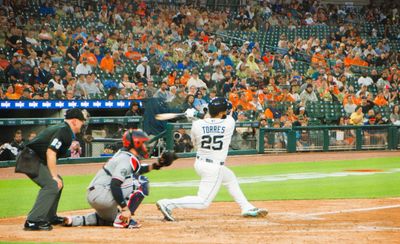
Javier Báez has missed considerable time with a high ankle sprain, Parker Meadows has been sidelined with an arm fracture, that happened April 9th vs the Twins in Minnesota. Trey Sweeney is out for the season with a shoulder injury, and Kerry Carpenter has also spent time on the injured list. Gleyber Torres missed a month because of an oblique strain. When multiple everyday players are unavailable at the same time, it becomes difficult for any lineup to establish rhythm and consistency.
The bullpen has also been impacted. Veteran closer Kenley Jansen is on the 15-day IL a groin injury, while Brant Hurter is on the 60-day IL with severe spine inflammation, and Burch Smith is currently on the 15-day IL due to right shoulder inflammation. The constant roster turnover has forced manager A.J. Hinch to adjust roles throughout the season.
The injuries alone do not explain a 27-39 record. The biggest issue has been an offense that has struggled to score consistently. Too often the Tigers have put runners on base only to leave them stranded. Detroit has struggled to come up with timely hits in key situations, and several close games have slipped away because the club could not capitalize on scoring opportunities. The lineup has also lacked depth at times. Opposing pitchers have been able to navigate through the batting order without facing any pressure. While several players have produced solid individual numbers, the Tigers have rarely had the entire lineup contributing at the same time. The starting rotation, despite the injuries, has still shown glimpses of being one of the better groups in baseball.
However, the lack of run support has left little room for error. Quality starts have frequently gone unrewarded, and a single mistake has often been enough to decide games. The bullpen has faced similar challenges. Relievers have routinely entered games with one-run deficits or narrow leads. Over the course of a long season, those situations can take a toll, and Detroit has seen several late-game opportunities slip away.
Defensively, the Tigers have also struggled in key moments. While they remain capable of making outstanding plays, untimely errors and missed opportunities have extended innings and allowed opponents to take advantage. Perhaps the most frustrating part of the season has been the Tigers' inability to build momentum. Whenever Detroit appears ready to turn things around, another losing streak follows. Winning streaks have been difficult to sustain, and consistency has been hard to find in every aspect of the game.
The 27-39 record is not the result of one issue. It has been a combination of injuries, inconsistent offense, pitching performances, bullpen struggles, and mistakes in critical situations. The good news for Tigers fans is that there is still time left in the season. Many of the players currently on the injured list are expected to return, and the talent that helped Detroit's success in previous seasons remains on the roster.
But time is becoming a factor. If the Tigers hope to make a run at the playoffs in the second half of the season, they will need to get healthier, score more consistently, and begin playing the type of baseball many expected when the season began.
For now, the Tigers continue searching for answers. At 27-39, the question is no longer whether Detroit has talent. The question is whether the club can overcome its injuries and inconsistencies before the season slips completely away.
Built Around Skenes: The Pirates' Most Important Rebuild in a Generation
Pittsburgh: May 28th, 2026
By Troy Geary
Geary Sports & Entertainment Network
The noise starts early now at PNC Park. Long before the first pitch leaves Paul Skenes’ hand, fans rise from their seats with phones already recording. Radar guns flash behind home plate. Television broadcasts linger on warmup pitches that would once have looked computer-generated. Every fifth day in Pittsburgh has begun to feel less like a regular-season baseball game and more like an event, so I had to experience it in person.
That alone marks a dramatic shift for the Pirates. For years, Pittsburgh baseball lived inside baseball’s middle ground, rebuilding, resetting, developing, waiting. The organization produced good players, occasionally exciting teams, but rarely the kind of transcendent talent capable of changing the trajectory of an entire franchise.
Skenes has changed that. Around him, an emerging wave of young talent has changed something even more important, belief. The Pirates are no longer selling distant potential. They are assembling one of baseball’s most intriguing young cores. And for the first time in decades, the future in Pittsburgh feels dangerously close.
Skenes remains the center of everything. His dominance has already elevated him beyond prospect hype into something larger, a franchise identity. Opposing hitters speak about his fastball with a mixture of respect and resignation. Evaluators see the rare combination every organization covets but few ever find, ace-level stuff paired with ace-level composure.
But the Pirates’ optimism does not stop with one pitcher. Behind Skenes, Pittsburgh has quietly built one of baseball’s deepest pitching pipelines. Bubba Chandler has emerged as another potential frontline starter, combining explosive velocity with rapidly improving command. Jared Jones and Braxton Ashcraft have reinforced the idea that the Pirates are no longer merely collecting hard throwers, they are developing them. Across baseball, evaluators increasingly view Pittsburgh as an organization capable of manufacturing elite pitching internally.
Then there is Konnor Griffin, the teenager many scouts believe could eventually become the face of the franchise. Griffin represents the modern superstar prototype: power, speed, athleticism, defensive versatility, and the type of ceiling that transforms rebuilds into contention windows. Some evaluators already place him among the best prospects of the past decade.
For Pittsburgh, that matters enormously. The Pirates have spent years searching for foundational position-player star power. Griffin may finally provide it. His rise gives the organization something it has lacked throughout much of its rebuilding cycle: balance. Skenes can anchor a rotation, but Griffin has the potential to electrify an entire lineup.
The broader roster only deepens the intrigue. Oneil Cruz remains one of baseball’s most physically gifted players, capable of changing games with a single swing. Bryan Reynolds continues to provide stability amid the transition. Young contributors like Nick Gonzales, Endy Rodríguez, and Henry Davis offer additional layers to a roster increasingly shaped by internal development rather than temporary solutions.
And yet, optimism in Pittsburgh always arrives with caution. Pirates' fans have seen talented cores before. They understand the realities of small-market baseball, where contention windows can close as quickly as they open. The challenge is no longer acquiring talent. The challenge is sustaining it.
Can ownership spend aggressively enough when the moment arrives? Can the organization keep stars long term? Can the Pirates capitalize before financial realities force difficult decisions? Those questions linger over every promising development.
That tension is what makes this moment fascinating.
Because the Pirates are no longer rebuilding in theory. They are approaching the dangerous phase where expectations become real.
For years, Pittsburgh searched for signs that the franchise was finally turning a corner. Now, every fifth day, the answer may already be standing on the mound, throwing 100 miles per hour.

📸 Christina Durham: Geary Sports & Entertainment Network